See What Happens When You’re Not There.
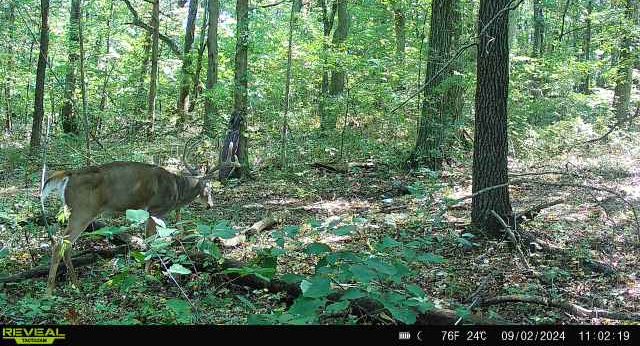
You can’t be in the woods 24 hours a day.
That’s where trail cameras come in.
Trail cameras give us a glimpse into what is happening when we’re not sitting in a tree or walking through the woods. They help us learn where deer are traveling, when they’re moving, what they’re feeding on, and how their patterns change throughout the year.
But a trail camera is more than a picture.
It’s information.
And learning how to use that information can make you a better hunter.
Patterning Deer
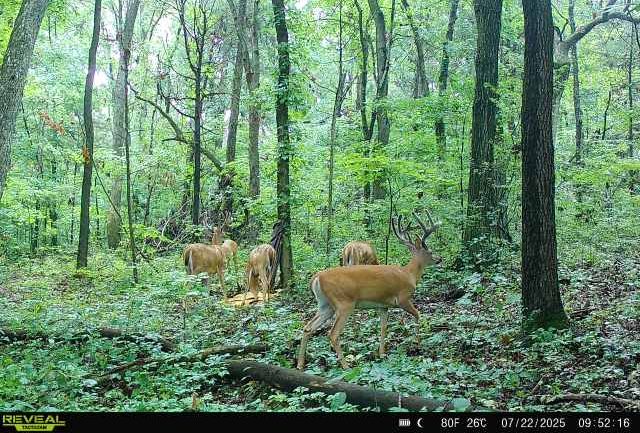
One of the biggest reasons we run trail cameras is simple:
We want to understand the deer we’re hunting.
A single picture might not tell you much.
But hundreds of pictures over weeks, months, and even years can tell a completely different story.
We look at:
- Time of day
- Date and season
- Wind direction
- Temperature
- Weather conditions
- Moon phase
- Barometric pressure
- Entry and exit routes
- Feeding patterns
- Buck movement
- Doe movement
- Changes throughout the season
The more information we collect, the better we can understand what is happening in the woods.
It’s About Patterns, Not Just Pictures
Anyone can look at a trail-camera photo and say:
“There’s a big buck.”
The real question is:
Why is he there?
Where did he come from?
Where is he going?
What time is he moving?
Is he using the same trail every year?
Is he showing up because of food, cover, water, or something else?
Those are the questions we want to answer.
A mature buck doesn’t have to show up in front of your camera every day to give you valuable information.
Sometimes one picture can change the way you hunt an entire property.
Tracking Bucks Through The Years
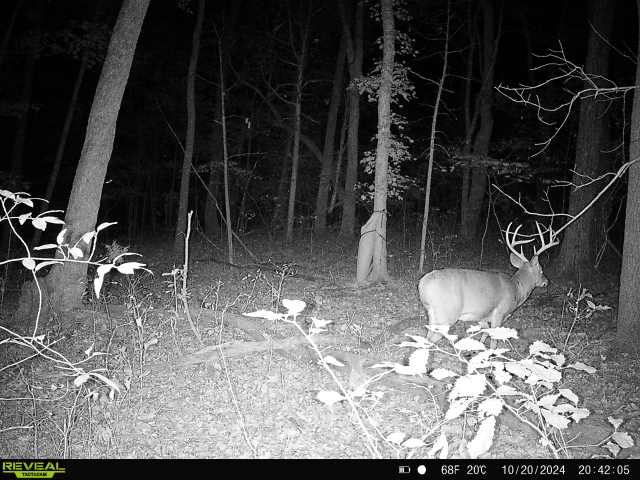
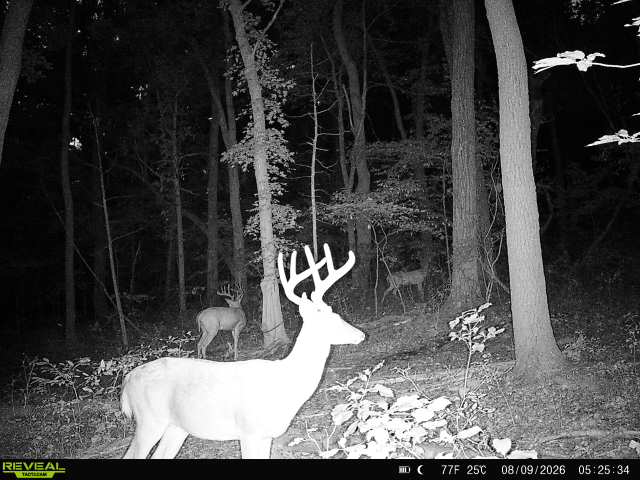
Some deer become more than just a picture on a camera.
When you photograph the same buck over multiple seasons, you can start looking at body size, antler characteristics, facial markings, behavior, and the areas he consistently uses.
Comparing old photos with new ones can help answer one of the hardest questions in deer hunting:
Is that the same buck?
We’ll document those comparisons and share what we see.
Sometimes we’re right.
Sometimes we’re wrong.
That’s part of the process.
The Data Behind The Hunt
Trail cameras can provide information that your eyes never could.
We pay attention to the conditions surrounding each photo because movement doesn’t happen in a vacuum.
Temperature, wind, weather, pressure, time of day, and seasonal changes can all help build a bigger picture.
Over time, that information can reveal patterns that aren’t obvious from a single hunt.
The goal isn’t to collect thousands of pictures just to say we have them.
The goal is to learn from them.
Cellular Cameras
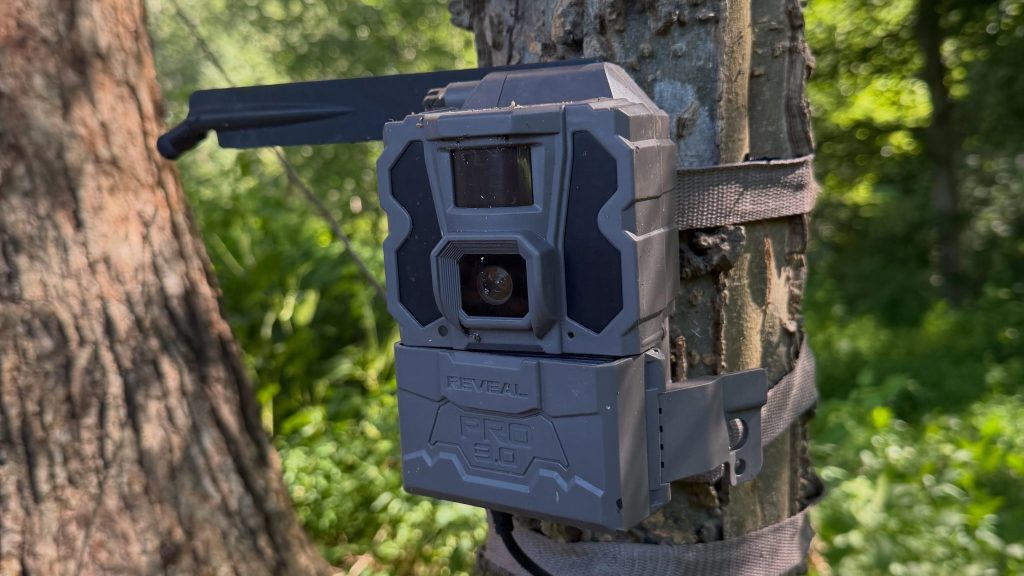
Cellular trail cameras have changed the way we scout.
Instead of waiting days or weeks to pull a card, we can see what’s happening in the woods almost immediately.
That can be especially useful when you’re trying to understand:
- Current deer movement
- New buck activity
- Changes in feeding patterns
- Property activity
- Weather-related movement
- What is happening before a hunt
But getting a picture is only the beginning.
- I use TACTACAM cameras they have not let me down. They offer good rates for cellular cams and get reception in a lot of places other cams don’t.
- Lithium Charger
- Some of our cameras I use the Battery Belt if I’m trying to keep pressure off deer herd and stay out of the woods for a long period of time.
The real advantage comes from knowing what to do with the information.
Trail Camera Mistakes
We’ve made plenty of them.
Cameras pointed the wrong direction.
Bad angles.
Too much sunlight.
Poor placement.
Too many pictures.
Not enough pictures.
Checking cameras too often.
And sometimes putting a camera somewhere that seemed perfect — only to discover the deer had a completely different plan.
That’s part of learning.
We’ll share the mistakes along with the successes because knowing what not to do can save someone else a lot of time.
From The Cameras
Real Photos. Real Deer. Real Patterns.
This is where we’ll share some of the most interesting trail-camera activity from Southern Pursuit Outdoors.
You’ll find:
- Big buck sightings
- Deer patterning
- Buck identification
- Trail-camera comparisons
- Seasonal movement
- Interesting wildlife
- Camera placement lessons
- Weather and movement observations
- Stories behind the photos
Some pictures will be impressive.
Some will be funny.
Some might completely change the way we approach a hunt.
And some might leave us asking:
“What the heck is that deer doing?”
The Hunt Starts Before You Ever Climb The Tree
A successful hunt doesn’t always begin when you pick up your bow or rifle.
Sometimes it starts months earlier with a trail camera.
Every picture is another piece of information.
Every pattern is another clue.
Every season teaches us something new.
That’s what makes trail cameras so valuable.
We’re not just watching deer.
We’re learning them.
The Pursuit Never Ends.
Southern Pursuit Outdoors is about learning from the field, sharing the experience, and becoming better every time we step outside.

