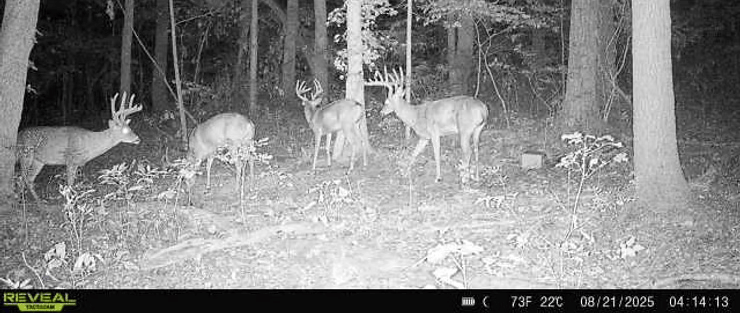
If there is one piece of equipment that has changed the way I hunt, it probably isn’t my bow, my stand, or even my broadheads.
It’s my TactaCam
Over the years, trail cameras have taught me that mature bucks don’t always follow the patterns we expect them to. The more time I spend watching them, the more I realize that hunting isn’t just about sitting in a tree and hoping a big buck walks by.
It’s about learning.
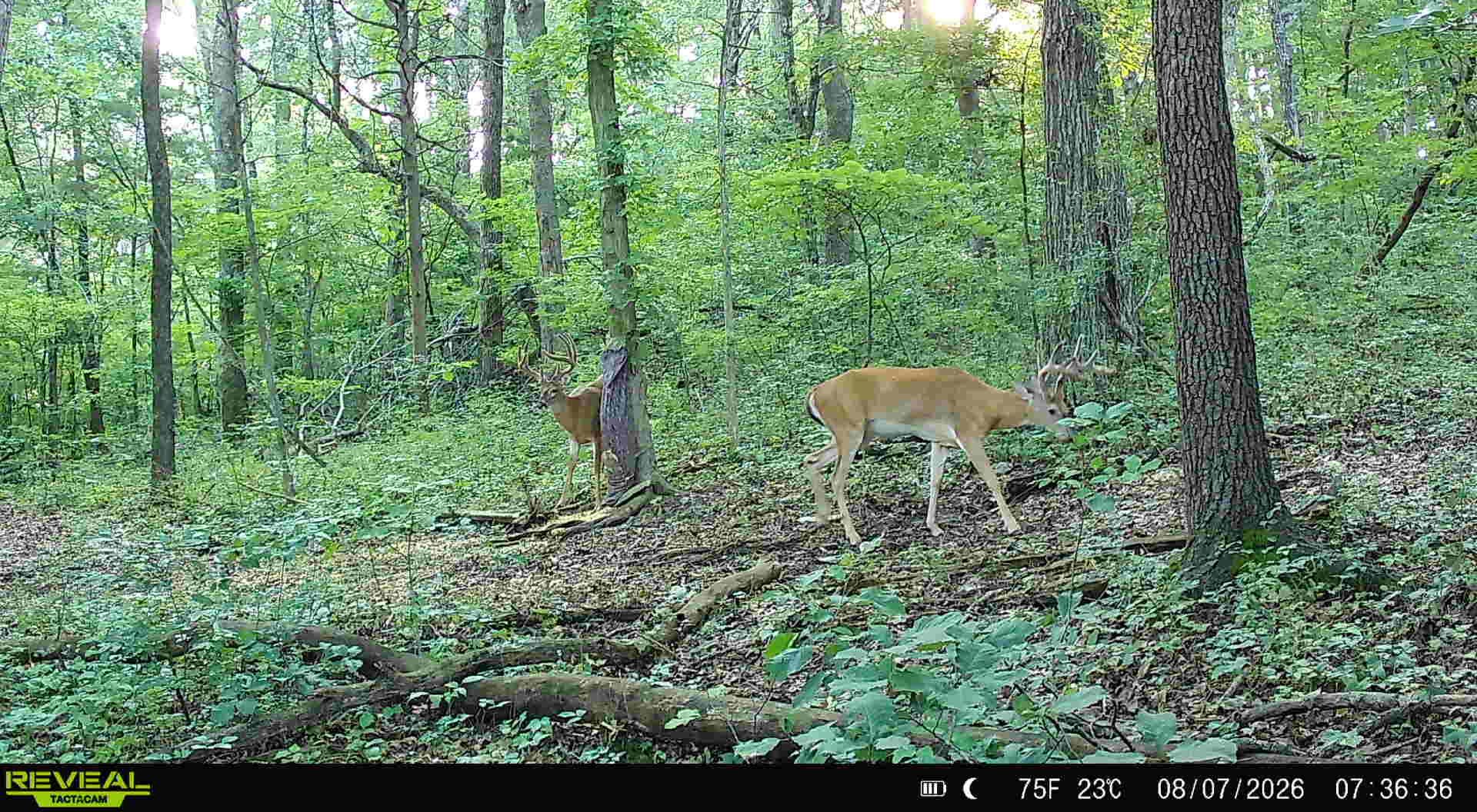
You Have To Watch Before You Hunt
One of the biggest lessons I’ve learned is that you can’t understand a buck by looking at one picture.
A single trail-camera photo only tells you what happened at that exact moment.
But when you start collecting pictures over days, weeks, months, and even years, you start seeing a story.
You begin noticing when a buck shows up. Where he’s coming from. Where he’s going
What time he’s moving. Which direction he’s traveling. And sometimes, most importantly, when he suddenly disappears.
That’s when trail cameras become more than just a way to see what’s walking around your property.
They become a scouting tool.
Mature Bucks Don’t Always Make Sense
“I’ve watched mature bucks show up consistently during certain parts of the year”
I’ve watched mature bucks show up consistently during certain parts of the year and then seemingly disappear overnight.
Early in the season, I have seen mature bucks traveling together in bachelor groups. Some of these bucks are deer I recognize from previous years.
Then something changes.
The bachelor groups break up. Deer change their patterns. Movement shifts. The places that were covered up with deer earlier in the year can suddenly feel empty.
That’s one of the reasons I don’t believe you can hunt the same way all season long.
A buck’s behavior can change.
And if you’re not paying attention, you can keep hunting yesterday’s pattern while the deer have already moved on.
Sometimes the Buck You’ve Been Looking For Is Still There
One of the coolest things about trail cameras is being able to compare deer from different years.
I’ve had bucks that I’ve watched for multiple seasons. Sometimes the antlers change enough that you might think you’re looking at a completely different deer.
That’s where looking at the whole deer becomes important.
Body size. Face shape. Ear position. Chest. Back. How the antlers come off the head. Main beams. Brows. Unique points.
Those little characteristics can sometimes tell you more than the overall score of the rack.
And there’s something pretty special about realizing that a buck you’ve been watching for years may still be walking the same ground.
The Camera Doesn’t Lie But It Doesn’t Tell You Everything Either
Trail cameras are incredibly useful, but I’ve learned not to let one picture make all my decisions.
A buck being photographed at 2 a.m. doesn’t necessarily mean he’s strictly nocturnal.
A buck disappearing from your camera doesn’t necessarily mean he’s gone.
And seeing a buck in a field doesn’t necessarily mean that’s where you should hunt him.
There’s always more to the story.
Wind, pressure, food, weather, hunting activity, rut timing, and changes in the landscape can all affect deer movement.
The camera gives you pieces of the puzzle.
It’s up to you to put them together.
Hunting Is About Learning
That’s probably the biggest lesson trail cameras have taught me.
I’m not trying to pretend I know everything about deer.
Every season teaches me something new.
Sometimes I make the right decision. Sometimes I completely screw it up.
But that’s what I love about hunting.
You can spend years in the woods and still learn something from the next deer that walks past your camera.
For me, that’s what Southern Pursuit Outdoors is about.
It’s not about pretending to be the world’s greatest hunter.
It’s about sharing what I’m learning, sharing the successes and the mistakes, and hopefully helping somebody else enjoy the outdoors a little more.
Because sometimes the biggest lesson isn’t the buck you harvest.
It’s everything you learned while trying to find him.


Leave a comment